
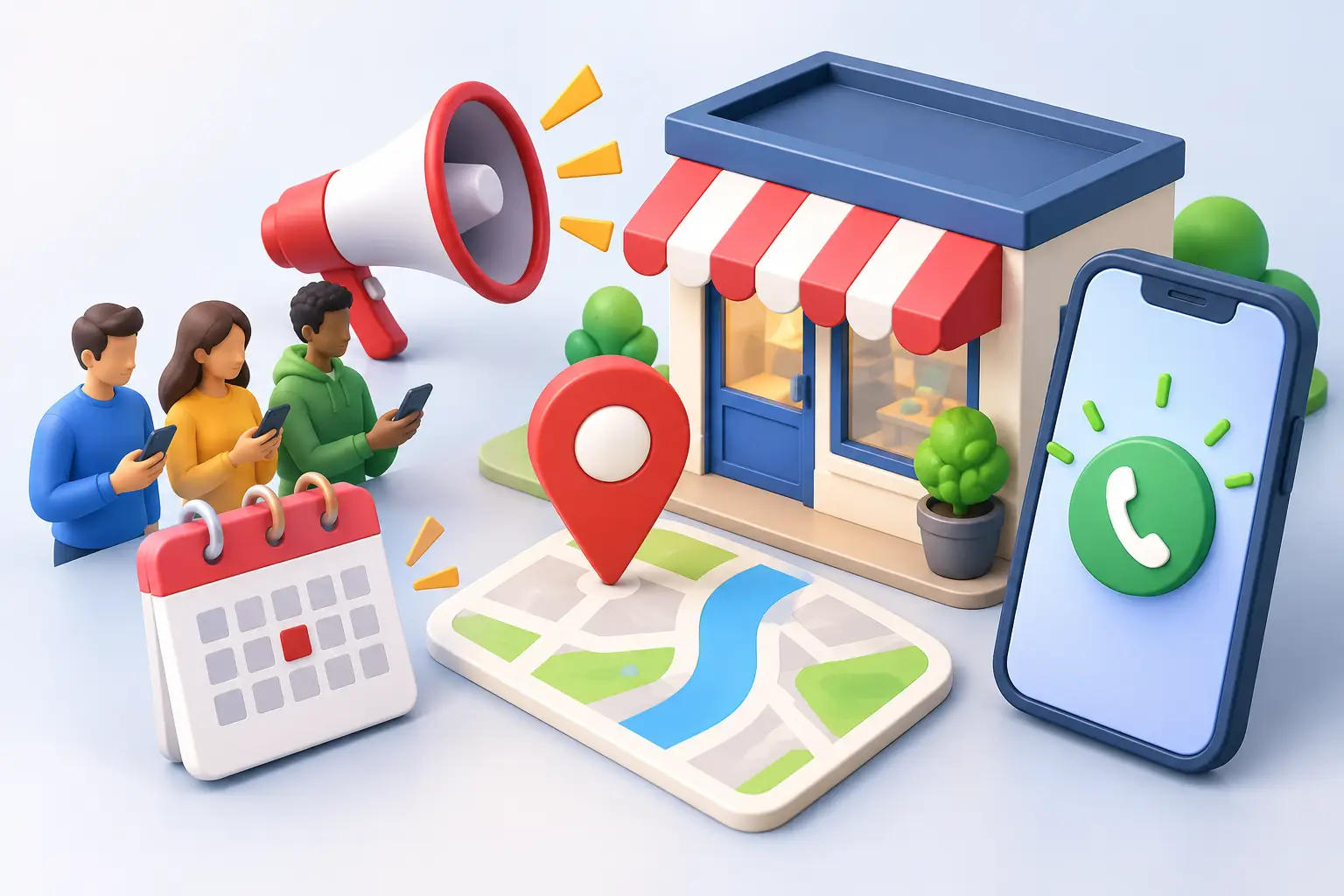
A slow Tuesday, open appointment slots, or an underbooked installation week is not a reason to throw out a random discount. It is a signal to build a focused campaign. Knowing how to plan local promotions helps you turn quiet periods into booked jobs, more calls, and stronger repeat business without training customers to wait for a sale.
Local promotions work when they are specific. A garage door company can fill same-week service slots. A chiropractor can introduce a new patient offer. A fence contractor can generate estimates before the busy season. The goal is not more social posts for the sake of posting. The goal is a clear offer that gives nearby customers a reason to act now.
Start With One Business Problem to Solve
Every promotion needs a job. If you try to increase awareness, sell a premium service, win reviews, revive past customers, and fill tomorrow’s schedule all at once, the message gets weak fast.
Choose one measurable outcome before you write a headline or design a graphic. For most local businesses, that outcome falls into one of three categories: fill unused capacity, generate new leads, or bring back previous customers.
A moving company with gaps in its midweek calendar might promote weekday moves. An auto repair shop could run a seasonal inspection offer before summer road trips. A massage therapist may focus on a rebooking incentive for clients who have not visited in 90 days.
The right promotion depends on your margins, your schedule, and how quickly a customer usually makes a decision. Emergency services can use short deadlines because urgency is already built into the purchase. Bigger jobs, such as solar installations or home remodeling, often need a longer campaign that offers a consultation, assessment, or useful first step instead of an immediate price cut.
Set a target you can track. For example: book 15 new patient appointments in 21 days, generate 30 qualified fence estimates before March 1, or reactivate 20 past customers this month. A real target tells you whether the promotion produced revenue or just activity.
Build an Offer People Can Understand in Seconds
A local promotion is not simply a discount. It is a reason to choose your business now instead of scrolling past, putting the job off, or calling a competitor.
The strongest offers are easy to explain, relevant to the season, and tied to a service people already want. Customers should not need to decode conditions, compare multiple packages, or hunt for the next step.
Your offer can use one of four practical angles:
- A limited-time savings offer, such as $50 off a repair over a set minimum.
- A value-added bonus, such as a free safety inspection with a booked service.
- A seasonal solution, such as a pre-winter tree risk assessment or spring HVAC tune-up.
- A priority or convenience benefit, such as reserved same-week appointment availability.
Discounts can bring fast attention, but they are not always the best choice. If your service has tight margins, protect your profit by adding value instead. A free add-on that costs you little can feel more valuable than a percentage off. For a home inspector, a complimentary maintenance checklist is useful and low cost. For a real estate agent, a free pricing consultation may be more effective than any discount could be.
Put boundaries around the offer. Include an expiration date, a service area, eligibility requirements, and any minimum purchase. Clear terms reduce confusion for your team and prevent unqualified leads from filling your inbox.
How to Plan Local Promotions Around Real Buying Moments
Timing is where many small businesses leave money on the table. Customers do not buy local services on a generic marketing calendar. They buy when a need becomes visible.
Think about weather, holidays, school schedules, local events, housing activity, and routine maintenance cycles. A tree service has a different calendar than a chiropractor. A garage door repair company can connect promotions to storm seasons and home safety. A moving company may plan around lease turnover, summer relocation, and college move-in dates.
Work backward from the buying moment. If you want estimates booked in early spring, start educating and promoting in late winter. If your busiest season is already full, use a promotion to sell maintenance plans, off-season work, or a future booking rather than discounting work you would have won anyway.
A short campaign can run for seven to 14 days when you need quick bookings. A higher-ticket local promotion may need 30 to 45 days, with repeated messaging that builds trust before asking for the appointment. The more expensive or disruptive the service, the more proof and follow-up customers usually need.
Pick Channels Your Local Customers Actually Use
You do not need to be everywhere. You need to show up consistently where local prospects can find, recognize, and contact you.
For most service businesses, a promotion should appear across your business profile, social media, email list, past-customer text list where permission has been granted, and the pages on your website that receive local traffic. If you have a physical location, in-store signage, counter cards, and staff scripts can reinforce the same offer.
Match the channel to the customer relationship. Email and text are especially useful for reactivating people who already know your work. Social posts and paid local ads can help generate new interest. Your business profile is valuable for high-intent searches, especially when someone is looking for a service in your city right now.
Keep the core message consistent, then adapt the format. A text message should be short and direct. An email can explain the offer and deadline. A social post needs a strong visual, local relevance, and one clear call to action. Do not make people guess whether they should call, book online, request an estimate, or send a message.
This is where purpose-built AI tools can save serious time. Rocket AI Prompts can help local operators create offer angles, ad variations, email drafts, service-specific social posts, and follow-up messages without starting from a blank screen. The smart move is not generating more content. It is generating campaign-ready content that stays aligned with one offer.
Give the Promotion a Simple Campaign Plan
A promotion performs better when your team knows exactly what happens before, during, and after launch. You do not need a complicated marketing dashboard. You need a basic plan that keeps the offer visible and makes leads easy to handle.
Before launch, confirm your capacity. Make sure you can answer calls, respond to form submissions, and honor the promise you are making. A great deal that creates a two-week response delay can damage trust.
During the campaign, publish the offer more than once. Many customers will not see the first post or email. Rotate the angle without changing the offer. One message can focus on savings, another on convenience, another on the seasonal problem, and another on customer results.
Train anyone who answers the phone or messages leads. They should know the offer details, expiration date, qualification rules, and the next action to request. A simple script helps: confirm the customer saw the promotion, ask a few qualifying questions, and move directly to booking or an estimate.
After the deadline, do not let the leads disappear. Follow up with prospects who asked questions but did not book. Some may need a reminder, a different appointment time, or a more relevant service option. The first promotion often creates a sales pipeline that continues after the public deadline.
Track Revenue, Not Just Likes
A promotion with plenty of comments but no appointments is not a win. Track the numbers that connect to real business growth: inquiries, booked appointments, completed jobs, average job value, and revenue collected.
Use a simple source question for every lead: “How did you hear about this offer?” You can also use a unique promo code, dedicated booking form, or campaign-specific phone tracking if those tools fit your business. The key is consistency. If your team does not record the source, you cannot tell which channel deserves more budget next time.
Review the results after the campaign ends. Look beyond total leads. Did the offer attract customers who bought profitable services? Did new clients rebook? Did one channel create better-quality prospects than another? A promotion that produces fewer leads but higher-value jobs may be the better investment.
Then improve one variable at a time. Test the offer, deadline, audience, creative, or channel, but avoid changing everything at once. That is how you learn what actually moved customers to act.
Your next local promotion does not need to be louder than every competitor’s. It needs to be more useful, more timely, and easier to act on. Start with the business problem sitting in front of you, create one clear offer, and give nearby customers a good reason to book today.






0 Comments