
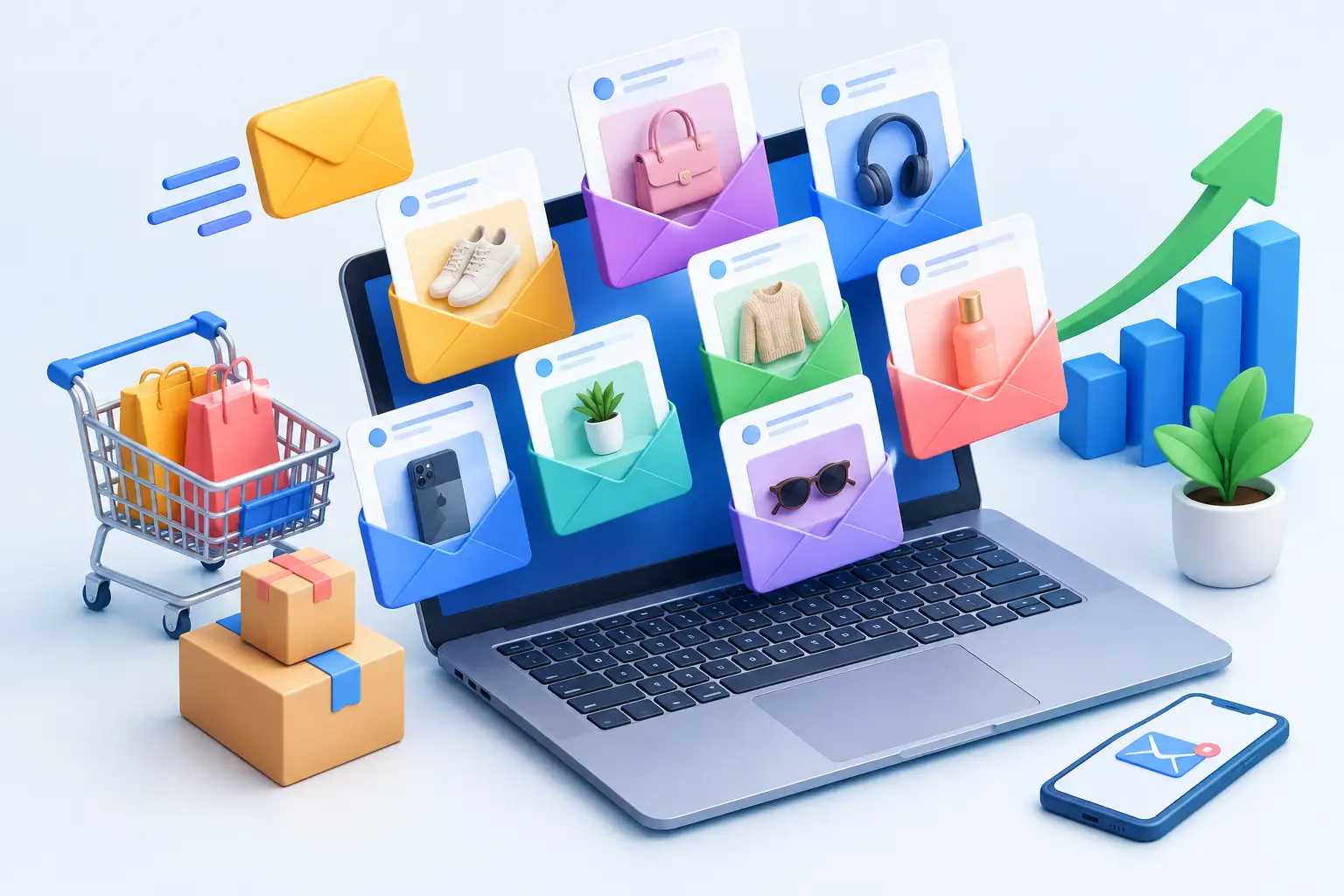
A new subscriber is interested for only so long. A shopper who leaves a product page, abandons a cart, or buys once is giving your store a clear signal: follow up with a useful reason to act. The right ecommerce email example turns that signal into revenue without sounding pushy, generic, or desperate.
Small ecommerce teams do not need a giant campaign calendar to make email work. They need a handful of high-intent messages written for the moments that matter most. Start there, improve based on clicks and sales, and let automation handle the repeat work.
What Makes an Ecommerce Email Worth Opening?
Strong ecommerce email is not just a product image, a discount code, and a big button. It answers the question in the customer’s head: Why should I care about this right now?
That answer might be a solution to a problem, proof from people like them, a timely reminder, or a real reason to buy now. The best messages use one clear job per email. A cart recovery email should recover the cart. A post-purchase email should help the buyer get value from what they bought. Trying to do five jobs at once usually gets ignored.
Keep the subject line specific. Give the email a single focal point. Make the call to action obvious. Then make sure the offer matches your margin. A 20% discount can rescue a stalled sale, but if you train every customer to wait for one, your list becomes expensive to maintain.
8 Ecommerce Email Examples You Can Adapt
1. Welcome Email: Set the Buying Expectation
Your welcome email gets attention because the subscriber just asked to hear from you. Do not waste that moment with a bland “thanks for joining.” Tell them what makes your products worth considering and point them toward an easy first action.
Subject line: Welcome – here is where to start
Email copy:
Welcome to [Brand Name]. We make
New here? Start with our customer favorites. They are the products shoppers come back for, recommend, and buy when they want results fast.
Use code FIRST10 for 10% off your first order through Friday.
Call to action: Shop Best Sellers
This works because it removes choice overload. For a store with a large catalog, best sellers are a much easier first click than a broad “shop now” button. If you sell one hero product, skip the collection and send people directly to its strongest product page.
2. Browse Abandonment Email: Bring Back Product Interest
A product-page visit is warmer than a casual newsletter signup. The shopper has already shown you what they want. Your job is to make the next step feel low-risk and logical.
Subject line: Still thinking about [Product Name]?
Email copy:
You took a look at [Product Name], and for good reason. It is built to help you [primary benefit] with [key differentiator].
Here is what customers notice most: [short, credible result or review quote].
If it is the right fit, it is ready when you are.
Call to action: View [Product Name]
Send this within a few hours, before the visit gets buried under everything else in a customer’s day. Add reviews, a short product demo, or a clear sizing guide when hesitation is common. Do not lead with a discount unless data shows price is the real barrier.
3. Cart Abandonment Email: Remove the Final Objection
Cart abandonment is where a small amount of clarity can produce a big lift. The customer made it almost all the way through checkout. Remind them what they selected, then answer the objection most likely to stop the purchase.
Subject line: Your cart is saved
Email copy:
Your [Product Name] is still waiting in your cart.
Need a quick reason to finish checkout? You get [free shipping, easy returns, fast delivery, warranty, bonus, or other real advantage] with every order.
Complete your order now and get back to [the desired outcome].
Call to action: Return to My Cart
The first cart email should be helpful, not aggressive. A second reminder the next day can add social proof or urgency if inventory is genuinely limited. A final offer can make sense for high-margin products, but test it against a no-discount version first.
4. Social Proof Email: Let Customers Sell for You
People trust other buyers more than brand claims. A social proof email is especially valuable when your product needs explanation, has a higher price point, or serves a specific use case.
Subject line: Why customers keep choosing [Product Name]
Email copy:
“[Short customer quote focused on a result.]”
That is why [Customer First Name] chose [Product Name]. It helped them [specific before-and-after outcome].
If you want [same outcome], see what makes it different.
Call to action: Read Customer Stories
Use real reviews whenever possible. Generic statements such as “customers love us” carry very little weight. A concise quote with a specific benefit is more believable and more useful than a wall of five-star icons.
5. Product Education Email: Help Before You Sell Again
Some products need a little confidence-building before purchase. Others create better repeat sales when customers know how to use them correctly. Education emails earn attention because they help the reader make a smarter decision.
Subject line: Get more from your
Email copy:
Most people use
With [Product Name], that means [simple explanation of feature or process]. You will get [benefit] without [pain point].
Call to action: See How It Works
For stores selling skincare, fitness gear, specialty food, tools, or digital products, this email can outperform another promotion. It builds confidence first. The trade-off is speed: education may not create an instant spike in sales, but it can create better customers and fewer returns.
6. Replenishment Email: Be There Before They Run Out
If customers reorder on a predictable schedule, replenishment is one of the simplest revenue automations you can run. Timing matters more than clever writing. Send the reminder before the customer runs out, not after they have already found an alternative.
Subject line: Time to restock?
Email copy:
If you have been using [Product Name] regularly, you may be close to needing a refill.
Restock now so you can keep [desired benefit] going without interruption. We saved your previous choice to make reordering easy.
Call to action: Reorder Now
Use purchase history to personalize the product and timing. A 30-day supply should not get the same reminder as a 90-day supply. If reorder behavior varies widely, test two reminder windows rather than guessing.
7. Win-Back Email: Give Quiet Customers a Reason to Return
A quiet customer is not always a lost customer. They may have forgotten, finished the product later than expected, or simply needed a new reason to care. A win-back email should feel like a smart reintroduction, not a guilt trip.
Subject line: We saved something for your next order
Email copy:
It has been a little while since your last order, so here is a reason to come back.
Shop [new collection, improved product, seasonal release, or returning favorite] and use code COMEBACK for [offer] by Sunday.
If your needs have changed, that is fine too. We would rather send fewer, better emails than fill your inbox.
Call to action: See What Is New
That final line gives the message a little respect. It can also reduce unsubscribes because customers feel they have a choice. For a brand with frequent launches, lead with what is new. For a replenishable product, lead with the familiar item they already liked.
8. Post-Purchase Email: Turn One Order Into a Relationship
The sale is not the finish line. A good post-purchase email lowers buyer’s remorse, helps the customer succeed, and opens the door to the next purchase at the right time.
Subject line: A quick tip for your new [Product Name]
Email copy:
Thanks for choosing [Product Name]. To get the best result, start by [first step].
Want to make it even better? Customers often pair it with [relevant complementary product] for [combined benefit].
Call to action: Get the Most From Your Order
Keep the first post-purchase email focused on the original product. An immediate upsell can feel premature if the customer has not even received the order. Offer accessories or related products after you have helped them feel good about the purchase.
Write Faster Without Sending Generic Emails
The fastest way to create stronger campaigns is to give every email a tight brief before you write. Name the customer segment, the trigger, the one goal, the primary objection, and the action you want them to take. That five-part setup keeps your copy focused whether you write it yourself or use AI to create a first draft.
AI can speed up subject line ideas, variations, product angles, and segmentation concepts. But it still needs your real inputs: your product details, margin limits, delivery promises, reviews, and customer language. Tools such as Rocket AI Prompts can help sellers generate purpose-built email drafts without spending hours building prompts from scratch. The final message should still sound like your store, not a template copied across the internet.
Start with the email closest to money: cart recovery if shoppers leave checkout, replenishment if customers reorder, or welcome if your list is growing fast. Improve one message, measure the result, and then build the next. A small set of useful emails sent at the right moment will do more for your store than a crowded calendar full of forgettable promotions.
0 Comments