
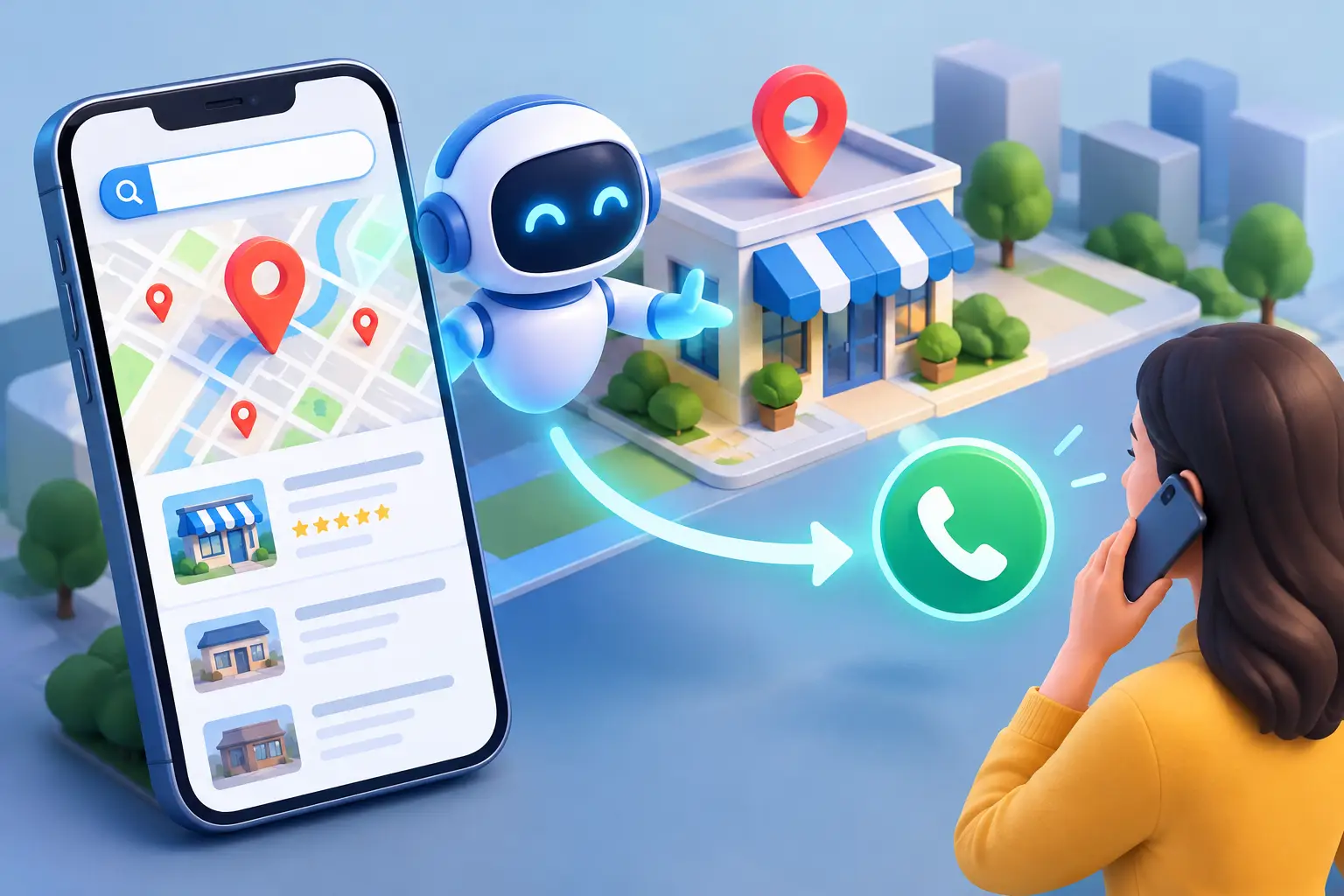
At 9:17 p.m., a homeowner searches for “garage door repair near me” after discovering a door that will not close. They are not looking for a clever brand story. They want a nearby company that looks credible, answers the question quickly, and makes it easy to call. That is where AI local marketing earns its keep. It helps small businesses show up with useful, polished marketing without turning the owner into a full-time writer, designer, or prompt engineer.
For a local service business, speed matters. So does relevance. A generic post about home improvement will not carry the same weight as a clear page about same-day spring replacement in your service area, a review response that sounds human, or a social post that explains what to do when a storm damages a fence. AI can help produce those assets faster. The business still provides the local knowledge, standards, and judgment that make the marketing believable.
Why AI local marketing works for service businesses
Local customers make decisions with limited information and high urgency. They compare a few nearby options, scan reviews, look for proof of expertise, and decide whether the company appears responsive. Every neglected profile, outdated service page, unanswered review, or vague social post creates friction at the exact moment a lead is ready to act.
AI helps remove the content bottleneck. Instead of staring at a blank page after a long day in the field, a tree service owner can turn one completed job into a Google Business Profile update, a before-and-after social caption, a short email to past customers, and a service-area page outline. A chiropractor can build a month of educational posts around common patient questions. A real estate agent can create neighborhood-specific listing content without rewriting the same basic message from scratch.
The advantage is not that AI makes local marketing automatic. The advantage is that it makes consistent marketing realistic for businesses with limited time and no in-house team.
Start with the questions local customers already ask
The best local content is rarely broad. It answers the practical questions people ask before they book: How much does this cost? Do you serve my neighborhood? Can you come today? What happens during the appointment? Is this repair urgent? What should I expect next?
Feed AI the raw material it needs to produce an accurate answer. Include your service, the cities or neighborhoods you serve, your ideal customer, your differentiators, seasonal concerns, and the action you want a prospect to take. The better the context, the less generic the output.
For example, a solar installer should not ask for “a post about solar.” A stronger request specifies a local market, the audience’s biggest objection, the available service, and the desired format. Ask for a 150-word post for homeowners in Phoenix who worry about summer electric bills, explaining how a consultation works and ending with a clear booking prompt. That gives AI a job it can complete well.
This is the shift that saves time: stop treating AI like a search box and start treating it like a capable marketing assistant with a detailed brief.
Build around real jobs, not random content ideas
Each service call, estimate, customer question, and seasonal change can become marketing material. A moving company can create content about preparing for a last-minute move. An auto repair shop can explain warning signs of a failing alternator. A fence contractor can publish a concise guide to choosing materials after wind damage.
These topics are useful because they connect to buying intent. They also demonstrate expertise before a prospect picks up the phone. You are not posting just to stay active. You are reducing uncertainty for someone close to making a decision.
Turn one local job into a week of marketing
Most small businesses already have the source material. It is sitting in job notes, customer calls, photos, estimates, and the owner’s experience. AI helps repurpose that material into channels that support visibility and trust.
Start with one recent job. Describe the customer’s issue, the service provided, the general area served, the outcome, and any lesson worth sharing. Do not include private customer details without permission. Then use that information to create content with different jobs to do.
A single completed garage door repair might become a short business profile update about noisy doors, an Instagram caption paired with a job photo, a service-page section explaining broken spring symptoms, and an email reminding past customers about preventive maintenance. The message changes slightly by channel, but the local proof stays consistent.
This approach is more effective than asking AI to produce 30 disconnected posts. Disconnected content often feels interchangeable. Job-based content feels earned because it comes from work your business actually performs.
Use AI where speed creates a real advantage
Not every marketing task deserves the same level of effort. AI is most valuable when it helps you produce necessary, repeatable assets faster while keeping the final decision in your hands.
Use it to draft location-aware service descriptions, write variations of ad headlines, organize content calendars, turn customer questions into FAQ copy, prepare review response options, and create follow-up emails after estimates. It can also help a local business turn a rough voice memo into a usable post or clean up an owner-written draft without stripping out personality.
Review responses are a particularly useful example. A fast, thoughtful reply shows future customers that your business pays attention. AI can draft a professional response in seconds, but do not copy and paste the same reply to every reviewer. Add the person’s name when appropriate, reference the actual service, and avoid sharing details that should remain private.
The trade-off is simple: the faster the content is produced, the more carefully it needs a human check. AI can write confidently about a service, price, regulation, medical topic, warranty, or financing offer that does not apply to your business. Accuracy is not optional when your reputation is local.
Keep the local details human
AI can create momentum, but it cannot visit your job sites, understand your team’s capacity, or know which neighborhoods are profitable for you to serve. That information must come from the business.
Before publishing, check the city names, service areas, pricing claims, availability statements, and calls to action. Make sure the copy sounds like your company, not a national franchise template. If you serve multiple towns, do not simply swap city names into identical pages. Add details that genuinely help residents in each area, such as common local needs, service availability, or relevant seasonal conditions.
For regulated industries, the review step matters even more. Chiropractors, wellness providers, financial professionals, and home improvement businesses should avoid unsupported claims, guarantees, or advice that crosses into territory requiring a professional evaluation. AI can draft. Your business is responsible for what goes live.
Create a simple weekly AI local marketing routine
Consistency beats the occasional giant marketing push. A practical weekly rhythm can take less time than one poorly planned social post.
Choose one customer question or recent job on Monday. Use AI to draft a business profile post, a social caption, and a short service-page improvement. On Wednesday, respond to new reviews and ask AI for three follow-up email subject lines for open estimates. On Friday, review what generated calls, form fills, messages, or booked appointments, then use those insights to shape next week’s content.
Track business outcomes, not vanity numbers alone. A post with fewer likes may still be a winner if it drives two estimate requests. A local service page may not feel exciting, but it can produce leads for months when it clearly answers a high-intent search.
Purpose-built tools make this process much easier. Rocket AI Prompts packages ready-to-use workflows for local professionals, so a contractor, agent, or wellness provider can start with the right marketing job instead of spending hours trying to invent the perfect prompt.
Make AI support the customer experience
The strongest local marketing promise is one your business can keep. If your content says “same-day service,” your phone process and scheduling need to support it. If your posts emphasize friendly expertise, your estimate follow-up should not feel rushed or generic.
Use AI beyond promotion. Draft appointment reminders, estimate follow-ups, onboarding emails, maintenance tips, and scripts for common customer questions. These small touchpoints can improve response speed and make a growing business feel organized without adding another person to the payroll.
Local customers remember how easy you made the next step. Use AI to keep your message clear, your follow-up timely, and your expertise visible – then let great service give every piece of marketing something real to say.







0 Comments