
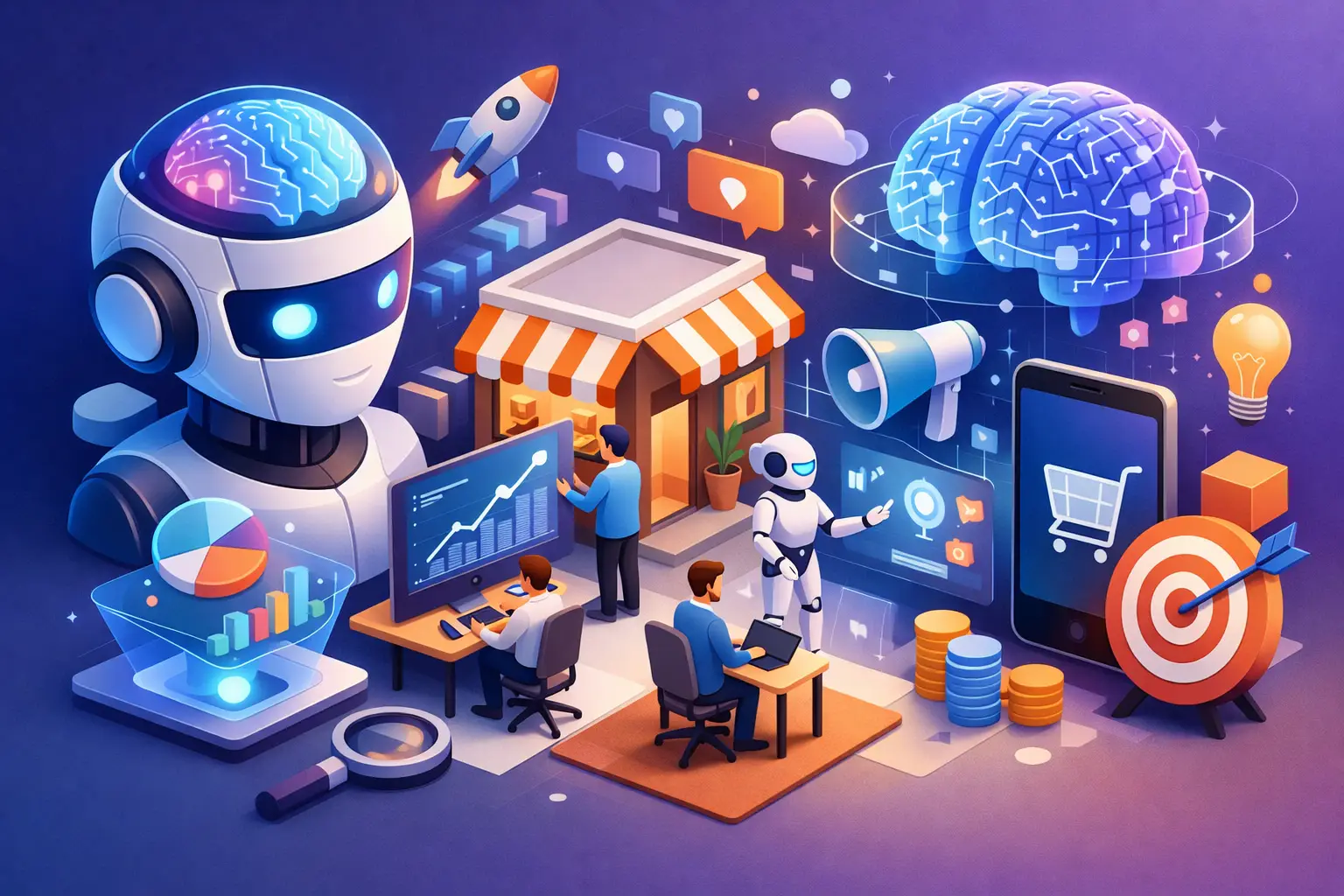
A local roofer does not need an AI strategy deck. They need three better estimates this week, follow-up emails that do not sound copied, and social posts that make a homeowner pick up the phone. That is why AI marketing trends 2026 matter: the useful shift is not more flashy software. It is AI becoming a practical assistant for the marketing work that keeps getting pushed to Friday.
For small businesses, the winners will not be the ones using the most tools. They will be the ones using the right workflows consistently. That means turning real customer questions, service details, reviews, sales conversations, and local expertise into content and campaigns that bring in work.
AI Marketing Trends 2026: Less Experimenting, More Output
The early AI rush was full of broad promises and generic results. Ask for “a Facebook post for my business,” and you got something technically usable but forgettable. In 2026, businesses are getting more specific. They are using AI with clearer inputs, clearer offers, and a clear next step for the customer.
A garage door company can turn a technician’s notes on broken spring repairs into a short educational post, a seasonal email, a service-page update, and a follow-up message for old estimates. A chiropractor can build a month of patient-friendly content around the questions people ask before booking. An ecommerce seller can create product angles for different buyer motivations instead of publishing one bland description everywhere.
The trend is not “generate more content.” It is “turn one useful business insight into several pieces of marketing that fit the channel.” That saves time, but it also creates a more consistent message across your website, email, ads, social media, and sales follow-up.
Specialized AI beats the blank chat box
General AI chat tools remain useful, but most business owners do not have time to learn prompt engineering. A blank screen creates another task: figuring out what to ask, what information to include, and how to fix the first weak answer.
Purpose-built GPT workflows are becoming more valuable because they start with the outcome. You choose a tool for ad angles, cold outreach, local visibility, lead magnets, product descriptions, or proposal writing. Then you feed it the details it needs. The process is faster because the tool already understands the job.
That does not mean every specialized tool is automatically better. The quality still depends on the business details you provide. A fence contractor who shares service areas, materials, project types, common objections, and customer priorities will get stronger output than one who enters “write a post about fences.” AI can organize and accelerate your expertise. It cannot invent credible local knowledge for you.
Personalization Moves Beyond First Names
Putting “Hi, Sarah” at the top of an email is not meaningful personalization. Customers notice when a message understands their situation, timing, and decision stage. In 2026, more small businesses will use AI to create versions of their marketing for different customer needs without writing every version from scratch.
Consider a solar installer. A homeowner worried about rising energy bills needs a different message from a buyer motivated by backup power or long-term home value. The service is related, but the reason to act is different. AI can help shape landing-page sections, ad copy, email sequences, and sales follow-ups around those motivations.
The same applies to local service marketing. A moving company may speak differently to a family moving across town, a senior downsizing, and a property manager coordinating a tenant turnover. Better segmentation makes marketing feel more relevant and often improves conversion because prospects can quickly see themselves in the message.
There is a line to respect. Personalization becomes creepy when it relies on sensitive assumptions or data customers did not expect you to use. Keep it grounded in information people freely provide, behavior connected to your business, and broad audience needs. Helpful beats invasive every time.
Search Content Is Becoming More Experience-Driven
AI has made it easy to flood the internet with generic articles. That also makes firsthand expertise more valuable. Search engines and customers both have reasons to prefer content that shows real experience, clear opinions, useful examples, and accurate local context.
For a home inspector, a strong article is not “10 Signs You Need a Home Inspection” rewritten for the thousandth time. It might explain what the inspector regularly finds in older homes in a specific region, what buyers misunderstand about foundation cracks, and what happens after a report is delivered. For an auto repair shop, it could address the actual symptoms drivers describe before a repair appointment.
AI can help turn that expertise into polished drafts, but the business owner or subject expert should supply the substance. Add local service details, common customer mistakes, pricing context where appropriate, photos or examples when available, and a real point of view. The goal is not to sound like a content machine. The goal is to become the obvious helpful choice when a buyer is comparing options.
Repurposing becomes a competitive advantage
Many small businesses already have valuable marketing material sitting in places they rarely revisit: estimate notes, customer emails, call transcripts, reviews, FAQs, job photos, product questions, and sales objections. AI makes it easier to turn those raw materials into usable assets.
One five-minute voice note from a technician can become a script for a short video, a Google Business Profile post, three social captions, an email tip, and a website FAQ. That is not cutting corners. It is making sure useful expertise reaches customers in the formats they actually consume.
The smart move is to create a simple capture habit. After a job, product launch, client call, or sales conversation, save the question or insight while it is fresh. Build a small library of real topics. When you need content, you will not be starting from zero.
AI Helps Sales Follow-Up Catch Up
Leads are expensive. Yet many small businesses still lose opportunities because follow-up is late, inconsistent, or too generic. This is one of the most practical AI marketing trends for 2026 because it connects directly to revenue already within reach.
AI can help draft estimate follow-ups, reactivation emails, appointment reminders, referral requests, proposal summaries, and responses to common questions. For agencies and freelancers, it can also turn discovery-call notes into a polished scope outline or a tailored proposal framework.
Speed matters, but relevance matters more. A follow-up should mention the service discussed, reflect the customer’s concern, and offer one easy next action. Do not send a wall of text just because AI can write one. A short message that answers “What happens next?” is often more effective.
Set guardrails before automating anything customer-facing. Review claims, prices, scheduling details, financing language, and compliance-sensitive statements. Healthcare, legal, financial, and regulated industries need extra caution. AI should reduce routine work, not become an unsupervised spokesperson.
Small Teams Will Build Lightweight AI Systems
The strongest businesses will stop treating AI as a one-off content generator. They will create repeatable mini-systems around the work they do every week.
A practical marketing system might include a brand voice reference, a list of approved offers, customer personas, service-area details, proof points, review excerpts, and calls to action. With those inputs ready, creating a campaign becomes much quicker and more consistent. You are not re-explaining your business to a tool every time you sit down to write.
This is where ready-to-use tools can save serious time. Rocket AI Prompts is built around outcome-specific workflows, so a business owner can focus on the campaign, content, or sales task instead of building prompts from scratch. The best setup is the one your team will actually use after a long day of serving customers.
Do not try to automate your entire business at once. Pick one bottleneck with a measurable cost. Maybe it is the time spent writing weekly posts. Maybe it is slow estimate follow-up. Maybe it is inconsistent product copy. Run a focused test for 30 days, track the output and response, then improve the workflow.
The Real Edge Is Better Judgment
AI can generate options quickly. It cannot decide which offer fits your margins, which customer concern deserves attention, or what your local market needs this month. Those decisions remain yours.
Use AI to get past the blank page, produce variations, organize ideas, and keep your marketing moving. Then apply the part competitors cannot copy: your experience, standards, customer knowledge, and willingness to follow through. The businesses that pair faster output with better judgment will not just publish more in 2026. They will earn more trust before the sale even starts.



0 Comments